HVAC · Mcnary, AZ
Each home receives a load calculation before equipment is ordered. Installations follow manufacturer torque and pressure specifications rather than shortcuts. A final performance check is documented and left with the homeowner.
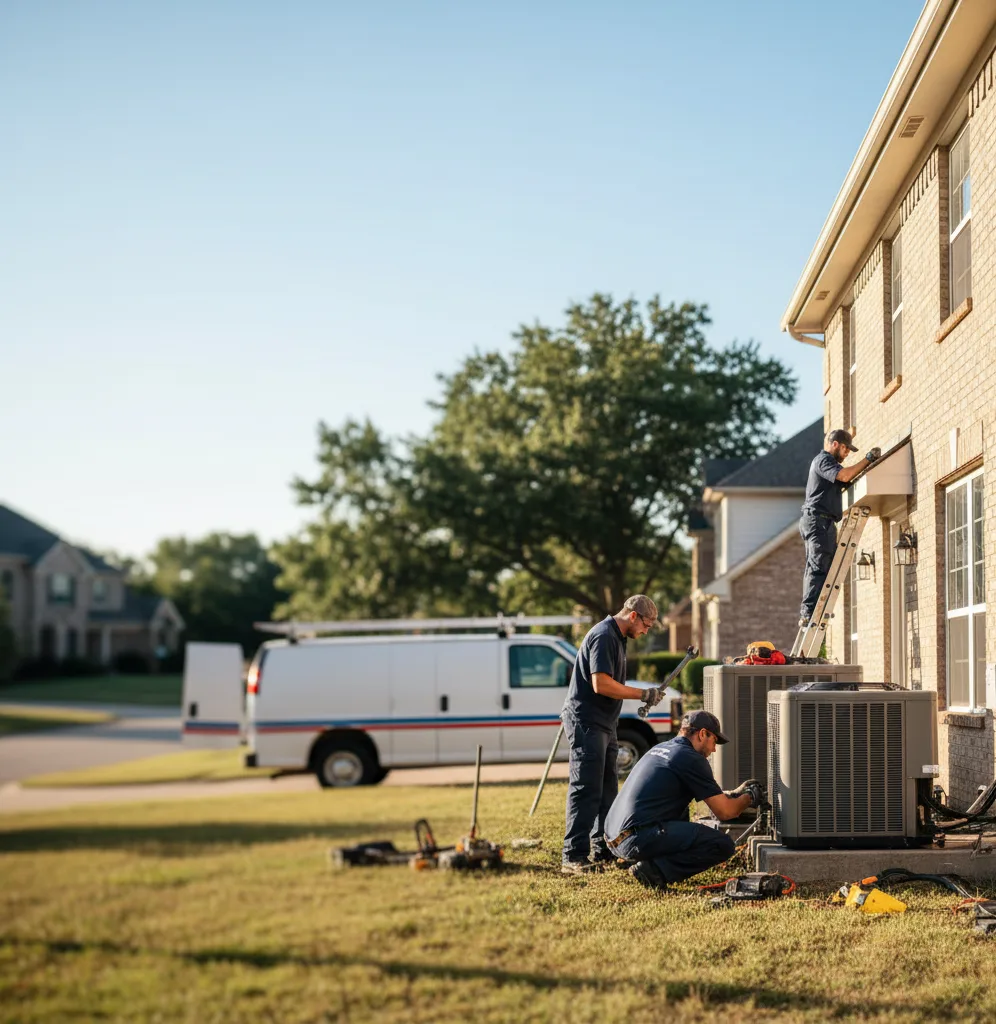
Technicians start by walking through the home and noting insulation condition, attic ventilation, window orientation, and any recent additions such as sunrooms or finished basements. Manual J calculations are performed on site rather than relying on rule-of-thumb estimates. Once the required capacity is established, equipment options are narrowed to those that fit the calculated load and the available electrical service. Placement of the outdoor unit takes prevailing wind patterns and shade during peak afternoon hours into account. Indoor coil location is chosen to minimize new duct runs while still allowing proper condensate drainage and easy duct cleaning. These steps reduce the chance of oversized equipment that short-cycles or undersized units that run continuously and may need AC repair.
Older properties often have limited space in mechanical closets or attics that were never designed for modern high-efficiency units. Electrical panels may need upgrades to handle the amperage draw of a new condenser. Condensate lines sometimes require rerouting to avoid finished ceilings. Technicians also check for asbestos-containing duct insulation or knob-and-tube wiring before any demolition begins. Addressing these conditions during the initial visit prevents mid-job delays and extra charges later.
The foundation and surrounding ground play a role in positioning outdoor AC units securely. Mcnary is situated on clay-heavy soil. Local water quality also factors into equipment longevity and performance over time. Mcnary gets moderately hard water from the taps.
The seasonal weather patterns directly influence how air conditioning systems are sized and installed to handle peak loads. Mcnary experiences warm summers and hard winters, around 73 inches of snow a year, and 169 nights below freezing. Planning for these variables supports consistent results across many different locations and property types.
FAQ

Most filters slide out from a marked compartment near the indoor unit and can be swapped without tools. If the system still runs poorly after a new filter is installed, the next step is a check of the blower wheel and evaporator coil for deeper buildup. A service call then confirms whether the issue is limited to airflow or something further in the refrigeration circuit.
Short cycling often comes from an oversized system, a dirty filter that restricts airflow, or a failing thermostat that misreads room temperature. The technician checks the temperature split across the coils and reviews the recent run times logged by the control board. Once the cause is identified the repair focuses on restoring steady operation rather than masking the symptom.
The price depends on the location of the leak, whether access requires removing panels or moving ductwork, and how much refrigerant must be recovered and replaced. Small leaks in accessible lines are often less expensive than those inside the coil itself. A full diagnosis is needed before an accurate range can be given.